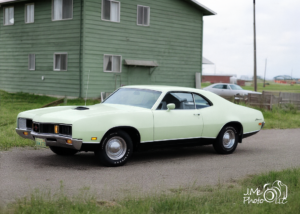
It is not about restoring a photograph so much as recovering a memory. Nobody brings me a damaged print because they care about the print. They care about the memory contained within it.
Every job is quoted
No two damaged photographs are damaged the same way, so there is no price list. Send me a phone photo of the photograph to be restored, and I will tell you what can be recovered, what would have to be rebuilt, what it costs, and how long it will take — before any work starts.
Two kinds of work
Repair
Cleaning rather than rebuilding. Surface dirt, scratches, water damage, fading, a color cast that has drifted over fifty years. The information is still in the print — the work is getting it back out.
Reconstruction
Something is missing. A torn corner, a face, a detail that was never sharp enough to read. It cannot be recovered, because it was never there. It has to be built, and then made to belong. In some cases that may even require modeling.
A 1971 Mercury Cyclone GT
A customer showed me a photograph of the car he had when he was younger. Black and white, low resolution, stained. It looked impossible. I scanned it to ensure the highest quality starting point, handed the original straight back, and said I would see what I can do.
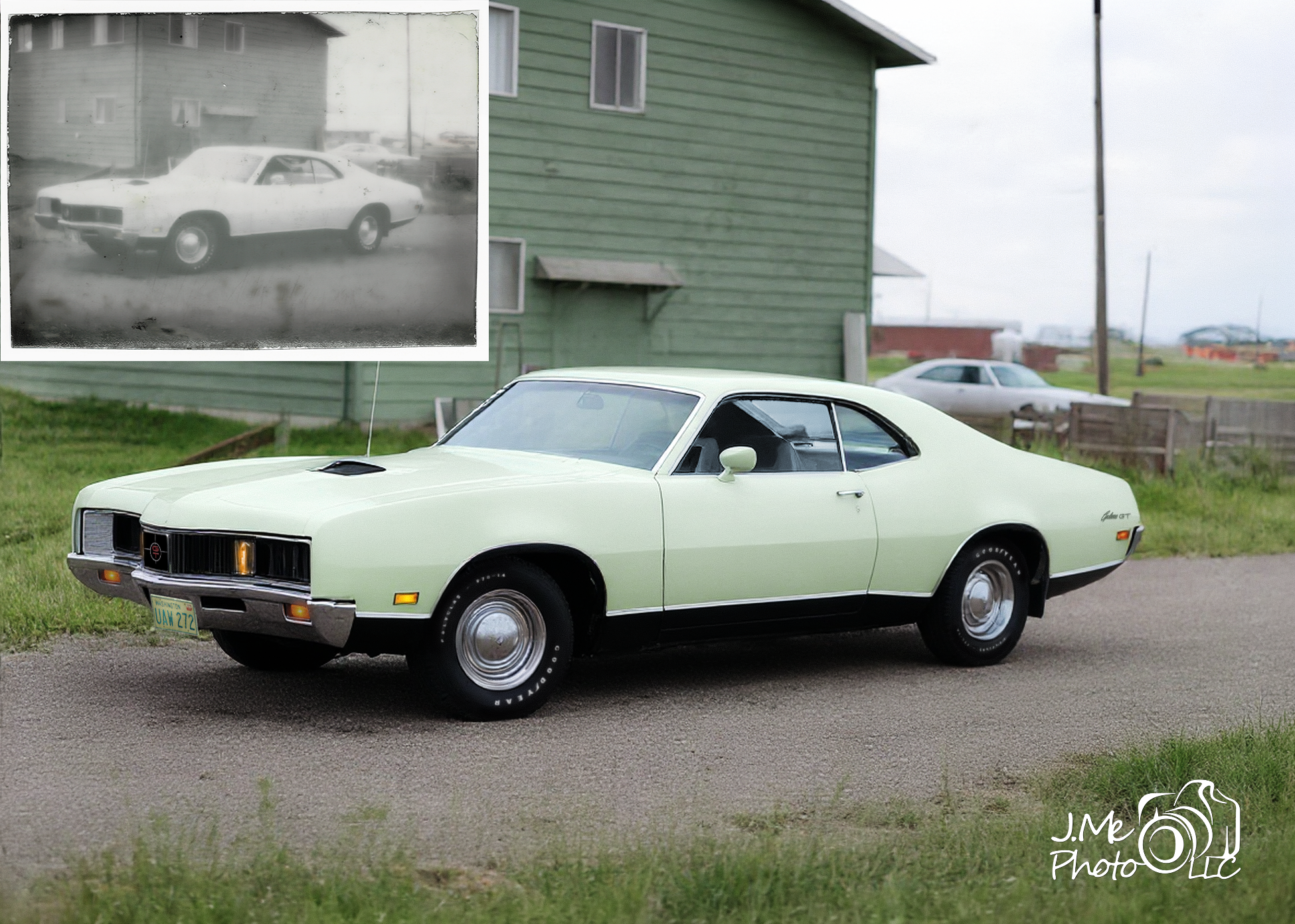
Modern tools do a lot of the early lifting on a print like this. You can even try this yourself, however they only get so far and do not finish it. The color of the car was a memory, as were the badges, the parking lights, the lettering on the tires. No detail existed in the license plate. All this was hand work. And one detail would not come at all.
The part that had to be built
The wheel hubs were not convincing, and no amount of retouching was going to fix that: the detail was never in the original to begin with. So I built it. The hub cap was modeled in 3D, rendered from the two angles the photograph needed, then matched to the scene. The virtual camera was placed where the original camera must have stood to have the same angle and aspect ratio on the car, estimating the same lens. It takes a great many adjustments before everything simply fits.
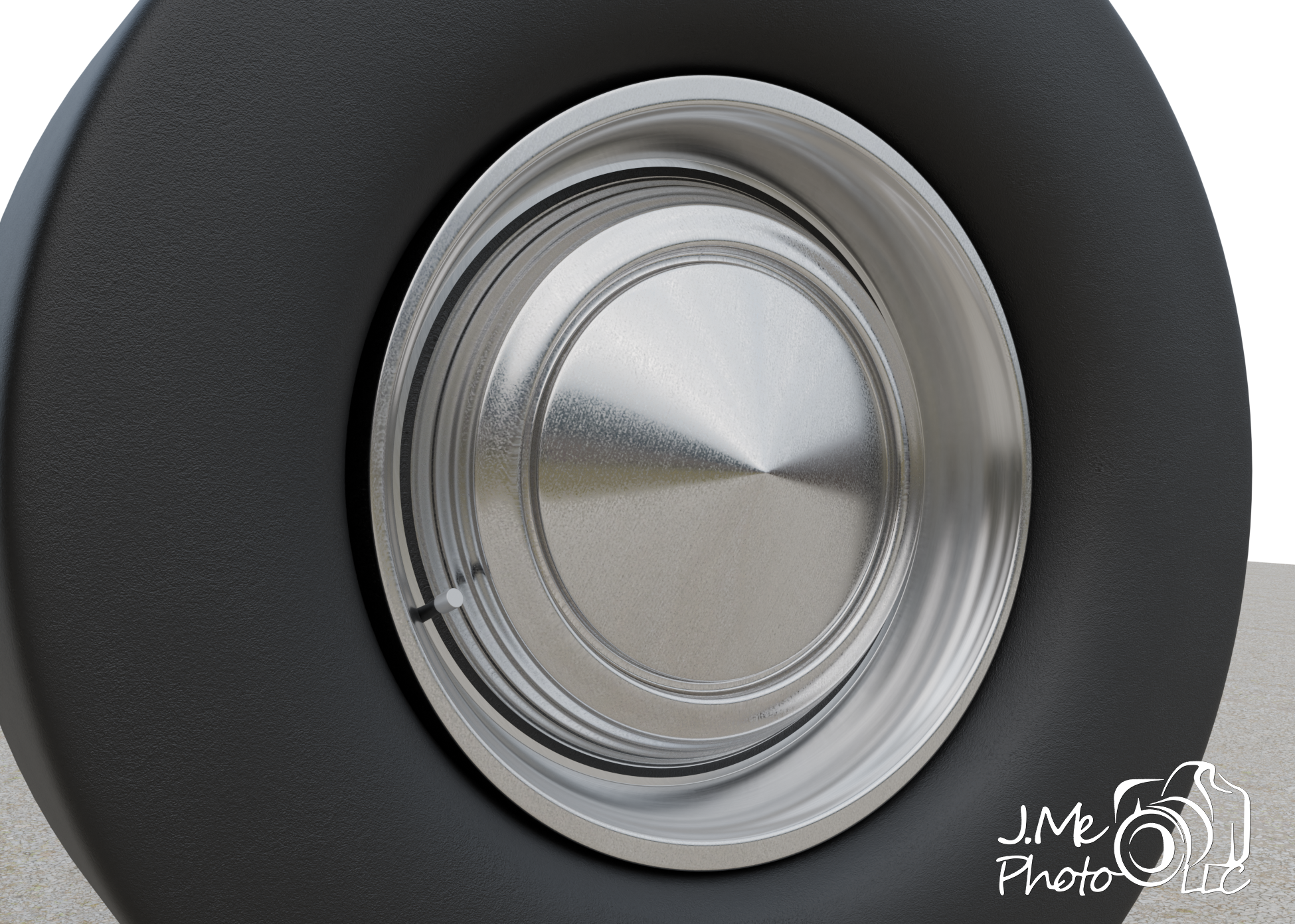
This is the line between repair and reconstruction. Nothing in the original could tell you what those hub caps looked like. They had to be made based on memory and reference images, and then made to belong.
When something matters to you, it matters to me.
Use your phone to take a quick picture of what you want restored. I will tell you honestly what I think can be recovered before you commit to anything. I typically reply within one working day.